Common Check Engine Light Causes
Discover the most common reasons your check engine light turns on, how serious each issue is, and what you should check before paying for repairs.

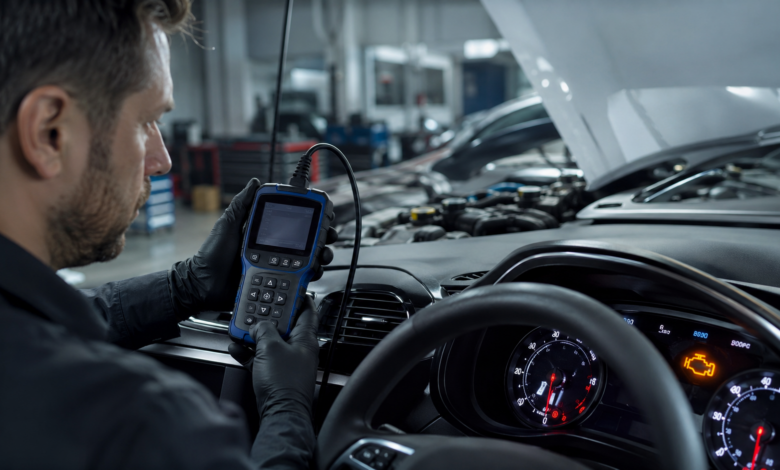
Quick answer: The top check engine light reasons are a loose gas cap, a failing oxygen sensor, a worn catalytic converter, misfiring spark plugs or ignition coils, and a dirty mass airflow sensor. A steady light means investigate soon; a flashing light means stop driving normally immediately — it signals an active misfire that can destroy the catalytic converter within minutes.
“It Just Came On Out of Nowhere” — My First Check Engine Light Experience
The first time my check engine light came on, I was 23 years old, driving a 2009 Toyota Corolla I’d bought three months earlier, and I genuinely thought the car was about to break down on the side of I-77 in Columbia, South Carolina. I pulled over, sat there for five minutes waiting for something to happen, and then — nothing. The car ran perfectly. I drove to the nearest AutoZone, they read the code for free, and the result was P0440: evaporative emission system malfunction. The cause? I hadn’t tightened the gas cap fully after filling up the night before. A firm twist of the cap, a code clear, and the light never came back.
That experience taught me the most important thing about the check engine light: it is a notification system, not an alarm. It tells you the vehicle’s computer has detected something outside its expected parameters — but it does not tell you how serious that something is. Understanding the most common check engine light reasons, which ones are urgent, and which ones can wait is the difference between a $15 fix and an unnecessary $800 repair bill. This article covers what I’ve learned across several vehicles and several years of dealing with that amber glow.
What the Check Engine Light Actually Means — and What It Doesn’t
The check engine light — technically called the Malfunction Indicator Lamp (MIL) — is triggered by the vehicle’s Engine Control Module (ECM) when a sensor reading falls outside its expected range for a defined number of drive cycles. The ECM monitors dozens of systems simultaneously: fuel delivery, ignition, emissions, exhaust, and more. When any monitored value deviates from its expected range persistently enough to confirm a fault, the ECM stores a Diagnostic Trouble Code (DTC) and illuminates the MIL.
What the check engine light does not tell you is how serious the fault is. A P0440 (EVAP system malfunction from a loose gas cap) and a P0300 (active engine misfire) both illuminate the same amber light with the same appearance — but one requires a $15 gas cap and the other may require immediate attention to prevent catalytic converter damage. The only way to distinguish between them is to read the stored code. Research suggests that a significant proportion of check engine light situations involve relatively minor faults that can be resolved inexpensively — but the same light can also indicate conditions that worsen rapidly if ignored.
The one exception to “investigate at your convenience” is a flashing check engine light. A flashing MIL — as opposed to a steady one — indicates an active misfire severe enough that the ECM is concerned about catalytic converter damage. This is the one check engine light condition that warrants reducing speed and avoiding hard acceleration immediately, regardless of how the car feels to drive.
Top 5 Reasons the Check Engine Light Turns On — and What to Do About Each
1. Loose, Cracked, or Missing Gas Cap
A faulty gas cap is the single most common cause of a check engine light, and also the least expensive to fix. The gas cap is part of the evaporative emission control (EVAP) system, which captures fuel vapors and prevents them from escaping into the atmosphere. When the cap doesn’t seal properly — because it wasn’t tightened after fueling, because the rubber seal has cracked with age, or because the cap is missing — the ECM detects a pressure drop in the EVAP system and stores a code: typically P0440 (general EVAP malfunction), P0442 (small leak), or P0455 (large leak). The check engine light illuminates, often within one to two drive cycles after the fueling event.
The fix: remove the gas cap, inspect the rubber seal for cracks or deformation, reinstall it firmly until it clicks (most caps click once or twice when properly seated), and clear the code. Drive normally for two to three days. If the light does not return, the gas cap was the cause. If it does return, the leak is elsewhere in the EVAP system. A replacement gas cap costs $10–$25 at any auto parts store and is the correct first step before any EVAP diagnostic work. I’ve seen this fix work on three separate vehicles — including a 2018 Ford F-150 that a shop had quoted $350 for an EVAP smoke test before the owner tried the gas cap first.
2. Failing Oxygen Sensor
Oxygen sensors (O2 sensors) measure the oxygen content of the exhaust gas and provide feedback to the ECM for fuel mixture adjustment. Most vehicles have two to four oxygen sensors: upstream sensors (before the catalytic converter) that provide real-time fuel trim feedback, and downstream sensors (after the converter) that monitor catalyst efficiency. When an oxygen sensor fails or its response time slows with age, the ECM detects the abnormal signal and stores a code — commonly P0136, P0141, P0151, or similar sensor-specific codes. A failing upstream O2 sensor can cause the ECM to miscalculate the fuel mixture, reducing fuel economy by an estimated 10–40% in some cases.
Oxygen sensors typically last 60,000–100,000 miles, though this varies by vehicle and driving conditions. Replacement is a straightforward job on most vehicles — the sensor threads into the exhaust pipe and requires an O2 sensor socket for removal. Parts cost $20–$80 for most sensors; labor adds $50–$150 at an independent shop. On a 2012 Subaru Outback with 88,000 miles, a P0141 (downstream O2 sensor heater circuit malfunction) was resolved with a $35 sensor and 30 minutes of work. The fuel economy improvement after replacement was noticeable within the first tank.
3. Worn Catalytic Converter
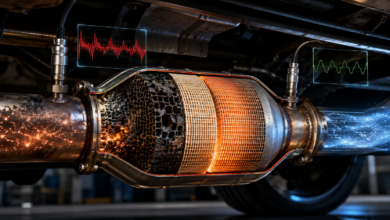
The catalytic converter reduces harmful exhaust emissions by converting carbon monoxide, hydrocarbons, and nitrogen oxides into less harmful compounds. Over time — typically after 100,000–150,000 miles — the catalyst material inside the converter degrades and loses efficiency. The ECM detects this through the downstream oxygen sensor: if the downstream sensor’s signal is too similar to the upstream sensor’s signal, the converter is not processing the exhaust effectively, and P0420 (catalyst system efficiency below threshold, bank 1) or P0430 (bank 2) is stored. A worn catalytic converter typically does not affect drivability noticeably, but will cause an emissions test failure.
Before replacing the catalytic converter — which costs $400–$2,000 depending on the vehicle — it’s worth ruling out simpler causes of P0420: a faulty downstream O2 sensor, an exhaust leak near the converter, or engine oil consumption contaminating the catalyst. A mechanic I spoke with in Nashville put it plainly: “We always test the O2 sensors before we condemn the cat. Half the time the sensor is the problem, not the converter.” On high-mileage vehicles where the converter is genuinely worn, replacement is necessary — but confirming the diagnosis with live O2 sensor data first is always worthwhile.
4. Misfiring Spark Plugs or Failing Ignition Coils
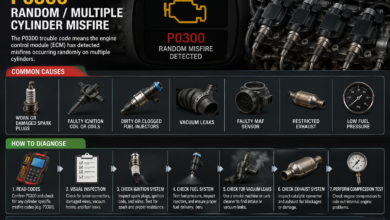
Engine misfires — where one or more cylinders fail to combust the air-fuel mixture properly — are among the most common causes of a check engine light, and the one most likely to produce a flashing MIL. Worn spark plugs, failing ignition coils, clogged fuel injectors, or a vacuum leak can all cause misfires. The ECM detects misfires by monitoring crankshaft rotation speed — a misfire causes a brief deceleration in the crankshaft that the ECM can identify. Codes P0300 (random/multiple misfire), P0301 through P0308 (cylinder-specific misfires), and related codes are stored when misfire thresholds are exceeded.
Spark plugs are a maintenance item with a defined replacement interval — typically 30,000–60,000 miles for conventional plugs and 60,000–100,000 miles for iridium or platinum plugs. On a 2016 Chevrolet Malibu with 72,000 miles and a P0302 (cylinder 2 misfire), swapping the ignition coil from cylinder 2 to cylinder 3 and clearing the code confirmed the diagnosis: the misfire moved to cylinder 3, confirming a failed coil rather than a fuel injector or mechanical issue. That diagnostic swap took 10 minutes and saved a $200 fuel injector replacement. If the check engine light is flashing with a misfire code, reducing speed and avoiding sustained highway driving until the misfire is resolved is strongly recommended.
5. Dirty or Failing Mass Airflow (MAF) Sensor
⚠️ Important note: A dirty MAF sensor is one of the most commonly overlooked causes of a check engine light — and one of the easiest to fix before spending money on diagnosis. The MAF sensor measures the volume and density of air entering the engine, allowing the ECM to calculate the correct fuel delivery. When the sensor element becomes coated with dust, oil from an over-oiled aftermarket air filter, or general contamination, its readings become inaccurate — causing lean or rich conditions, rough idle, hesitation, and codes including P0101 (MAF circuit range/ performance), P0171 (system too lean), or P0174. Before replacing the MAF sensor ($80–$300 in parts), clean it with dedicated MAF sensor cleaner spray ($8–$12) — remove the sensor, spray the sensing element lightly, allow it to dry completely (do not wipe), reinstall, and clear the code. This resolves the issue in a meaningful number of cases, particularly on vehicles with aftermarket oiled air filters or those that haven’t had the air filter replaced in over 30,000 miles.
Step-by-Step: How I Handle a Check Engine Light Before Calling a Shop
Step 1: Note Whether the Light Is Steady or Flashing
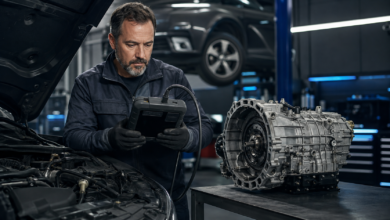
The first thing I do when the check engine light comes on is observe whether it is steady or flashing. A steady light means I have time to read the code and research it before taking any action. A flashing light means I reduce speed, avoid hard acceleration, and get the vehicle to a shop or read the code as quickly as possible — because a flashing MIL indicates an active misfire that can damage the catalytic converter rapidly. I also note whether there are any accompanying symptoms: rough idle, hesitation, reduced power, unusual smells, or changes in fuel economy. These observations help narrow the likely cause before the code is even read.
Step 2: Read the Code with a Bluetooth OBD-II Adapter
I keep a Veepeak OBDCheck BLE adapter ($30) in my glove box at all times. When the check engine light comes on, I plug it into the OBD-II port under the dashboard, open the Car Scanner app on my phone, and read all stored codes within two minutes of noticing the light. Reading the code immediately — before driving further — preserves the freeze frame data, which shows the operating conditions at the moment the fault was stored. That data (vehicle speed, engine load, coolant temperature, fuel trim values) often provides as much diagnostic information as the code itself.
Step 3: Check the Gas Cap First (If the Code Is EVAP-Related)
If the code is P0440, P0442, or P0455, the first step is always the gas cap — before any other diagnosis. Remove it, inspect the seal, reinstall firmly, clear the code, and drive normally for two to three days. This takes two minutes and costs nothing. If the code returns, the leak is elsewhere in the EVAP system and further diagnosis is needed. Skipping this step and going straight to a smoke test ($75–$150) when the gas cap is the actual cause is a common and entirely avoidable expense. I’ve made this mistake once — I won’t make it again.
Step 4: Research the Code for Your Specific Vehicle
Once the code is identified, I search for it combined with my vehicle’s year, make, and model — not just the code alone. “P0420 2016 Toyota Camry” yields far more useful information than “P0420.” Manufacturer-specific forums, the NHTSA TSB database (nhtsa.gov), and communities like Reddit’s r/MechanicAdvice often contain real-world case studies for specific vehicles that identify the most common root cause for that exact code on that exact platform. This research takes 15–20 minutes and frequently identifies a known fix — sometimes even a TSB — that a general shop might not mention.
Step 5: Perform Basic Checks Before Paying a Diagnostic Fee
Before paying a shop’s diagnostic fee ($100–$175 in most U.S. markets), I run through a basic checklist: check engine oil level and condition; check coolant level; inspect visible vacuum hoses for cracks; check the air filter condition; and for MAF-related codes, clean the MAF sensor. These checks take 20–30 minutes, cost nothing beyond basic supplies, and resolve a meaningful number of check engine light situations without any shop involvement. If the basic checks don’t resolve the issue, I take the vehicle to a shop with the code already identified and the basic checks already completed — which often reduces the diagnostic time and cost.
Frequently Asked Questions — Check Engine Light Reasons
What are the most common reasons the check engine light turns on?
The most common causes are a loose or faulty gas cap (EVAP leak codes), a failing oxygen sensor, a worn catalytic converter, misfiring spark plugs or ignition coils, and a dirty or failing mass airflow sensor. These five causes account for a large proportion of check engine light situations across all vehicle makes and model years. Most are inexpensive to fix if addressed promptly, but can lead to more costly secondary damage — particularly catalytic converter damage from unresolved misfires — if ignored.
Is a flashing check engine light more serious than a steady one?
Yes, significantly. A steady check engine light indicates a stored fault that should be investigated but does not typically require stopping immediately. A flashing check engine light indicates an active engine misfire severe enough that the ECM is concerned about catalytic converter damage from unburned fuel entering the exhaust. Reducing speed, avoiding hard acceleration, and having the vehicle inspected promptly is generally recommended when the MIL is flashing. Continuing to drive normally with a flashing light can convert a $30–$80 spark plug repair into a $1,500 catalytic converter replacement.
Can a loose gas cap cause the check engine light to come on?
Yes — and it’s one of the most common causes. A loose, cracked, or missing gas cap allows fuel vapors to escape the EVAP system, which the ECM detects as a pressure drop and stores as an EVAP leak code (P0440, P0442, or P0455). Tightening or replacing the gas cap ($10–$25) and clearing the code resolves the issue in many cases. This is always the correct first step when an EVAP-related code appears, before any smoke test or EVAP system diagnosis is authorized.
How long can I drive with the check engine light on?
A steady check engine light from a minor cause — loose gas cap, failing O2 sensor, minor EVAP leak — can typically be driven for several days while the cause is investigated. A flashing check engine light should not be driven normally. Codes indicating low oil pressure, overheating, or active transmission faults with symptoms generally warrant stopping promptly. Reading the code first is the only reliable way to determine how urgently the situation needs to be addressed — driving without knowing the code is the riskiest approach.
How much does it cost to diagnose and fix a check engine light?
Code reading is free at most auto parts stores (AutoZone, O’Reilly, Advance Auto Parts) and with a $25–$35 Bluetooth OBD-II adapter. Professional shop diagnostic fees run $100–$175 in most U.S. markets. Repair costs range from $10–$25 for a gas cap to $150–$300 for an oxygen sensor, $30–$150 for spark plugs, $100–$300 for a MAF sensor, and $400–$2,000 or more for a catalytic converter. The wide range reflects the importance of accurate diagnosis — the same check engine light can indicate a $15 fix or a $1,500 repair, and the code is the only way to tell the difference.
Conclusion & My Take
After years of dealing with check engine lights across multiple vehicles, the single most useful habit I’ve developed is reading the code immediately — before driving further, before calling a shop, and before worrying. The code transforms an amber light with no context into a specific, searchable fault that can be researched, diagnosed, and often resolved without professional help. A $30 Bluetooth adapter and a free smartphone app provide that information within two minutes of the light appearing.
The second most useful habit is starting with the simplest possible cause. EVAP code? Check the gas cap first. MAF-related code? Clean the sensor before replacing it. Misfire code? Check spark plug condition and swap coils to confirm the diagnosis before buying parts. These simple first steps resolve a meaningful proportion of check engine light situations at minimal cost — and they take less time than driving to a shop and waiting for a diagnostic appointment.
The one situation where I don’t wait is a flashing check engine light. That’s the one case where the vehicle is telling you something urgent, and the cost of ignoring it — a destroyed catalytic converter — is far higher than the cost of addressing it immediately. Have you had a check engine light situation that turned out to be simpler than you expected — or one that caught you off guard? I’d be glad to hear about it in the comments.
Sources
- U.S. Environmental Protection Agency — OBD-II Onboard Diagnostic Requirements — epa.gov
- National Highway Traffic Safety Administration (NHTSA) — Technical Service Bulletin Database — nhtsa.gov
- SAE International — J1979 OBD-II Diagnostic Test Modes Standard — sae.org
- ASE (Automotive Service Excellence) — Engine Performance and Emissions Certification — ase.com
- CarMD Vehicle Health Index — Annual Report on Most Common Check Engine Light Causes — carmd.com