P0420 Code: Causes, Symptoms and Fixes
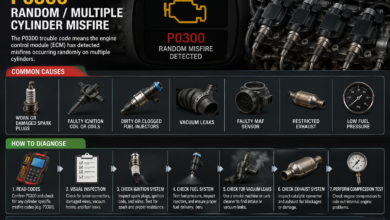
Learn what the P0300 random misfire code means, the most common causes, and how to diagnose ignition, fuel, and engine problems before replacing expensive components.

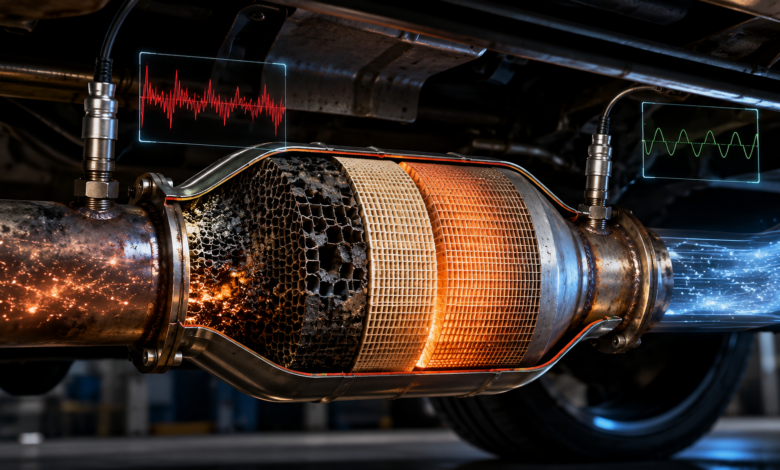
Quick answer: P0420 code causes include a worn catalytic converter, a faulty downstream O2 sensor, an exhaust leak, or engine oil consumption contaminating the catalyst. Check the downstream O2 sensor’s live data pattern first — a rapidly switching signal means the converter is degraded; a flat signal at an unexpected voltage suggests a faulty sensor. Replace the O2 sensor before the converter; it’s far less expensive and resolves P0420 in many cases.
“The Shop Said I Need a New Catalytic Converter” — Why I Got a Second Opinion
The check engine light on my 2014 Honda Accord came on during a routine commute, and the code was P0420. The first shop I visited quoted me $1,340 for a catalytic converter replacement — OEM part, installed. I paid the $120 diagnostic fee, took the quote home, and started reading. What I found in Honda-specific forums was a consistent pattern: P0420 on 2013–2017 Accords was frequently caused by a faulty downstream oxygen sensor, not a failed converter. Honda had even issued a Technical Service Bulletin addressing the issue on certain model years.
I took the car to a second shop — an independent mechanic who specializes in Japanese vehicles — and asked him to show me the downstream O2 sensor live data before recommending any repair. The downstream sensor was producing a flat signal at 0.45V rather than the switching pattern of a degraded converter. He replaced the downstream O2 sensor for $185, cleared the code, and the P0420 code has not returned in 18 months. The $1,155 difference between the two quotes came down to one diagnostic step that the first shop skipped. This article covers how to approach P0420 diagnosis correctly — starting with the O2 sensor data before any parts are replaced.
How the ECM Monitors Catalyst Efficiency — and Why P0420 Is Frequently Misdiagnosed
A catalytic converter reduces harmful exhaust emissions by converting carbon monoxide, hydrocarbons, and nitrogen oxides into carbon dioxide, water, and nitrogen through chemical reactions facilitated by precious metal catalysts (platinum, palladium, and rhodium). The converter also stores and releases oxygen — a function called oxygen storage capacity (OSC) — which allows it to buffer the air-fuel mixture variations from the upstream combustion process. The ECM monitors this oxygen storage function through the downstream oxygen sensor.
In a healthy catalytic converter, the downstream O2 sensor produces a relatively stable signal — typically hovering around 0.6–0.7V — because the converter’s oxygen storage capacity buffers the exhaust composition variations. As the converter degrades and loses its oxygen storage capacity, the downstream sensor begins to mirror the upstream sensor’s switching pattern — rapidly alternating between low voltage (lean exhaust) and high voltage (rich exhaust). When the ECM detects that the downstream sensor is switching too rapidly — indicating that the converter is no longer buffering the exhaust — P0420 is stored.
The reason P0420 is so frequently misdiagnosed is that the same downstream O2 sensor signal pattern that indicates a degraded converter can also be produced by a faulty downstream sensor, an exhaust leak near the converter, or an engine running condition that has overwhelmed the converter. A shop that replaces the catalytic converter based on P0420 alone — without examining the downstream O2 sensor data — is making a diagnosis based on the code rather than the data. Research suggests that a meaningful proportion of P0420 cases are resolved without catalytic converter replacement.
P0420 Code: 5 Common Causes and How to Diagnose Each
1. Worn or Degraded Catalytic Converter
A catalytic converter that has reached the end of its service life — typically after 100,000–150,000 miles, though this varies significantly by vehicle and driving conditions — loses its oxygen storage capacity and can no longer process exhaust emissions efficiently. The precious metal catalyst material degrades with heat cycling, contamination, and age. A genuinely worn converter produces a downstream O2 sensor signal that closely mimics the upstream sensor — rapid switching between low and high voltage — because the converter is no longer buffering the exhaust composition. This pattern, confirmed in live data, is the clearest indicator that the converter itself is the cause of P0420.
Confirming converter failure requires examining the downstream O2 sensor waveform with a scanner capable of displaying live O2 sensor data. A degraded converter shows a downstream sensor switching at a rate approaching the upstream sensor’s switching rate. A healthy converter shows a downstream sensor that is relatively stable. On a 2008 Toyota Camry with 148,000 miles, the downstream O2 sensor was switching at nearly the same frequency as the upstream sensor — clear evidence of converter degradation. OEM converter replacement ($600–$900 in parts for most Toyota applications) resolved P0420 permanently. Aftermarket converters are available at lower cost but may not meet the ECM’s efficiency threshold on all vehicles — particularly on California-emissions vehicles that require CARB-compliant converters.
2. Faulty Downstream Oxygen Sensor
A downstream oxygen sensor that has failed or is providing inaccurate readings can trigger P0420 even when the catalytic converter is functioning correctly. A faulty downstream sensor may produce a signal that appears to switch rapidly (mimicking a degraded converter) when the converter is actually healthy, or may produce a flat signal at an incorrect voltage that the ECM interprets as a catalyst efficiency fault. Downstream sensors are subject to the same aging and contamination as upstream sensors — they typically last 60,000–100,000 miles — and on high-mileage vehicles, sensor replacement is a reasonable first step before converter replacement.
Diagnosing a faulty downstream sensor requires examining its signal pattern in live data. A downstream sensor on a healthy converter should produce a relatively stable signal around 0.6–0.7V. A sensor that is stuck at a fixed voltage (not responding to exhaust composition changes), producing an erratic signal, or showing a heater circuit fault code (P0141, P0161) alongside P0420 is suspect. Downstream O2 sensor replacement costs $50–$120 in parts for most applications; labor adds $50–$100. On my Accord, the flat 0.45V signal — rather than the expected stable 0.6–0.7V — indicated a sensor that was not responding correctly, not a degraded converter.
3. Exhaust Leak Near the Catalytic Converter
An exhaust leak upstream of the downstream O2 sensor — at the exhaust manifold, the flex pipe, or the converter inlet — introduces ambient oxygen into the exhaust stream. This additional oxygen causes the downstream sensor to read lean (low voltage) more frequently than it should, which the ECM interprets as the converter failing to store and release oxygen correctly, triggering P0420. An exhaust leak is often audible as a ticking or hissing sound from the exhaust system, particularly on cold start when the metal is contracted. The sound typically diminishes as the exhaust system warms up and the metal expands, sealing the leak partially.
Inspecting for exhaust leaks involves listening for exhaust sounds with the engine running, and visually inspecting the exhaust manifold gasket, flex pipe, and converter inlet for carbon deposits or soot — which indicate exhaust gas escaping at that point. Exhaust leak repairs range from $100–$400 depending on the location: a manifold gasket replacement is more involved than a flex pipe repair. Clearing P0420 after an exhaust leak repair and monitoring whether the code returns is the appropriate follow-up.
4. Engine Oil or Coolant Consumption Contaminating the Converter
Engine oil or coolant entering the combustion chamber — from worn piston rings, valve stem seals, or a failing head gasket — passes through the exhaust system and coats the catalytic converter’s precious metal catalyst with oil ash or coolant deposits. This contamination physically blocks the catalyst surface, reducing its efficiency and triggering P0420. Oil consumption contamination is indicated by blue smoke from the exhaust (oil burning) or white smoke with a sweet smell (coolant burning). A converter that has been contaminated by oil or coolant will typically fail again shortly after replacement if the underlying engine issue is not addressed first.
If P0420 appears alongside symptoms of oil or coolant consumption — blue or white exhaust smoke, oil level dropping between changes, coolant level dropping without visible leaks — the engine issue should be diagnosed and repaired before any converter replacement is authorized. Replacing a converter on an engine that is consuming oil will result in the new converter failing within 20,000–40,000 miles, repeating the expense. A compression test and a cooling system pressure test help identify the source of oil or coolant entering the combustion chamber.
5. ECM Software Issue or Incorrect Fuel Trim
⚠️ Important note: On certain vehicle platforms — particularly Toyota Camry, Corolla, and Prius models from 2007–2014, and Honda Accord and Civic models from 2013–2017 — P0420 can be triggered by an ECM software calibration issue rather than any physical fault with the converter or sensors. Manufacturers have issued Technical Service Bulletins (TSBs) for these platforms describing ECM software updates that recalibrate the catalyst efficiency monitor threshold. Before authorizing any parts replacement on these vehicles, checking the NHTSA TSB database (nhtsa.gov) for P0420-related TSBs for the specific year, make, and model is strongly recommended. An ECM software update — performed by a dealer or a shop with the appropriate programming equipment — may resolve P0420 without any parts replacement. Additionally, a persistently rich-running engine (high negative fuel trim) can overwhelm the converter with unburned fuel, causing it to fail prematurely — addressing the rich condition first is essential before replacing the converter.
Step-by-Step: How I Diagnose P0420 Before Authorizing Any Repair
Step 1: Check for TSBs Before Anything Else
The first thing I do when P0420 appears is search the NHTSA TSB database for the specific year, make, and model. On Toyota and Honda vehicles in particular, P0420 TSBs are common and can save significant expense. I search nhtsa.gov for the vehicle and look for TSBs related to the catalyst monitor, oxygen sensor calibration, or ECM software. If a relevant TSB exists, I bring it to the shop and ask whether the update has been applied. This five-minute search has saved me from unnecessary parts replacement on more than one occasion.
Step 2: Examine Downstream O2 Sensor Live Data
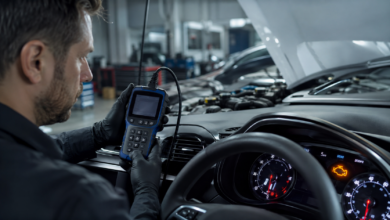
With the engine at operating temperature, I use a scanner with live data capability to monitor both the upstream and downstream O2 sensor signals simultaneously. I observe the downstream sensor’s behavior: a stable signal around 0.6–0.7V indicates a healthy converter; a rapidly switching signal that mimics the upstream sensor indicates a degraded converter; a flat signal at an unexpected voltage (below 0.5V or above 0.8V) suggests a faulty sensor. I record the waveform pattern for at least two minutes of normal driving before drawing any conclusions — the downstream sensor’s behavior can vary with driving conditions.
Step 3: Check for Exhaust Leaks
With the engine running, I listen for ticking or hissing sounds from the exhaust system — particularly near the exhaust manifold, the flex pipe, and the converter inlet. I visually inspect these areas for carbon deposits or soot, which indicate exhaust gas escaping at that point. On vehicles where the exhaust manifold is accessible, I run my hand near (not on) the manifold while the engine is running to feel for exhaust pulses that indicate a leak. An exhaust leak that is causing P0420 is often audible and visible before any scanner data is needed.
Step 4: Check for Oil or Coolant Consumption
I check the engine oil level and note whether it has dropped since the last oil change. I check the coolant reservoir level and note whether it has dropped without any visible external leaks. I observe the exhaust on a cold start for blue smoke (oil) or white smoke with a sweet smell (coolant). If any of these indicators are present alongside P0420, I address the engine consumption issue before any converter replacement — a contaminated converter will fail again quickly if the source of contamination is not eliminated.
Step 5: Replace the Downstream O2 Sensor Before the Converter
If the downstream O2 sensor data is ambiguous — not clearly showing a degraded converter pattern — and the sensor is more than 80,000 miles old, I replace the downstream sensor before the converter. The sensor costs $50–$120 in parts and takes 30–45 minutes to replace. If the sensor replacement resolves P0420, the converter was not the cause — and I’ve saved $600–$1,500. If P0420 returns after sensor replacement with a clear degraded-converter waveform pattern, the converter replacement is then confirmed as necessary. This sequence — sensor first, converter second — is the approach that avoids the most common and most expensive P0420 misdiagnosis.
Frequently Asked Questions — P0420 Code Causes
What does the P0420 code mean?
P0420 means the ECM has determined that the Bank 1 catalytic converter is not reducing emissions as efficiently as required. The ECM monitors catalyst efficiency by comparing the upstream and downstream oxygen sensor signals — a degraded converter produces a downstream signal that closely mimics the upstream signal, indicating loss of oxygen storage capacity. P0420 does not confirm that the converter has failed; it indicates that the catalyst efficiency monitor has detected a problem that requires diagnosis.
What are the most common causes of P0420?
The most common causes are a worn catalytic converter (on high-mileage vehicles), a faulty downstream oxygen sensor, an exhaust leak near the converter, engine oil or coolant consumption contaminating the catalyst, and an ECM software calibration issue on certain Toyota and Honda platforms. Examining the downstream O2 sensor live data pattern is the most important diagnostic step — it distinguishes between a degraded converter and a faulty sensor before any parts are purchased.
How do I know if P0420 is the O2 sensor or the catalytic converter?
Examine the downstream O2 sensor’s live data pattern. A degraded converter produces a downstream signal that switches rapidly, mimicking the upstream sensor. A faulty downstream sensor produces a flat signal at an unexpected voltage or an erratic signal that doesn’t correlate with driving conditions. If the downstream sensor is switching rapidly and the vehicle has high mileage, the converter is likely degraded. If the signal is flat or erratic, the sensor is the more likely cause. Replacing the sensor first — before the converter — is the lower-cost diagnostic step.
Can I drive with a P0420 code?
P0420 typically does not affect drivability — the vehicle usually runs normally with no noticeable performance loss. The vehicle will fail an emissions inspection while P0420 is stored. Driving with P0420 for a short period while arranging diagnosis is generally possible, but the cause should be identified and repaired. If P0420 is accompanied by symptoms of oil or coolant consumption, prompt diagnosis is more important — the underlying engine issue may be causing additional damage.
How much does it cost to fix P0420?
Costs range from free (an ECM software update via TSB) to $1,500 or more for an OEM catalytic converter replacement. A downstream O2 sensor replacement typically costs $100–$250 parts and labor. An exhaust leak repair runs $100–$400. Aftermarket catalytic converters cost $100–$500 in parts but may not resolve P0420 on all vehicles. OEM converters cost $400–$1,500 in parts. Accurate diagnosis — particularly examining the downstream O2 sensor data and checking for TSBs — before authorizing any repair is strongly recommended.
Conclusion & My Take
P0420 is the code that generates more unnecessary catalytic converter replacements than any other in my experience — because the code sounds like a converter problem, and replacing the converter is the most expensive interpretation. The diagnostic step that prevents this misdiagnosis is examining the downstream O2 sensor live data before authorizing any repair. That one step — which takes five minutes with a scanner — distinguishes between a $185 sensor replacement and a $1,340 converter replacement.
The sequence I follow for P0420 is: check for TSBs first, examine downstream O2 sensor data, inspect for exhaust leaks, check for oil and coolant consumption, and replace the downstream sensor before the converter if the data is ambiguous. This sequence resolves P0420 in many cases without converter replacement — and when converter replacement is genuinely necessary, the data confirms it before the money is spent.
Have you dealt with a P0420 code that turned out to be a sensor rather than a converter — or one where the converter genuinely needed replacement? I’d be glad to hear about it in the comments.
Sources
- U.S. Environmental Protection Agency — OBD-II Catalyst Monitor Requirements — epa.gov
- NHTSA — Technical Service Bulletin Database (P0420 and Catalyst Monitor TSBs) — nhtsa.gov
- SAE International — J1979 OBD-II Catalyst Efficiency Monitor Standards — sae.org
- ASE (Automotive Service Excellence) — Engine Performance and Emissions Certification (Test A8) — ase.com
- CarMD Vehicle Health Index — Annual Report on Catalytic Converter and O2 Sensor Fault Codes — carmd.com